Ayush AgarwalI am an MSCS student at Stanford University, where I am a member of the IRIS Lab advised by Prof. Chelsea Finn. I graduated with highest honors from the Georgia Institute of Technology with a B.S. in Computer Science. My interests are in robotics, computer vision, and reinforcement learning. Previously, I was a member of the People, AI, and Robots (PAIR) Lab advised by Prof. Animesh Garg, where I led the development of COBALT, a platform for crowdsourcing robot demonstrations with smartphones, and worked on world action models (WAMs) for learning from human video. I have also interned at LinkedIn and Johnson & Johnson as a Software Engineering Intern. Email / GitHub / Google Scholar / LinkedIn / CV |
|
ResearchI'm interested in developing learning algorithms that can effectively leverage diverse, multimodal data sources to enable robust robot learning. While robotics has been constrained by limited data compared to other AI domains, I believe the key lies not just in collecting more data, but in creating algorithms that can optimally extract knowledge from heterogeneous sources, including simulation, real-robot demonstrations, and internet videos. Some questions I am interested in discussing and exploring:
|
|
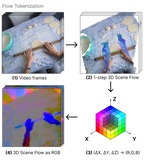
FloMo: 3D Scene Flow as a World Action Model Intermediate for Learning from Human VideoJeremy A. Collins*, Namra Patel*, Ayush Agarwal*, Shitij Govil*, Animesh Garg Under review at IEEE International Conference on Robotics and Automation (ICRA), 2027 paper / website / A world action model that renders 3D scene flow into the latent space of a pretrained video generation model and fine-tunes a single backbone to predict both motion and robot actions. Co-trained on egocentric human video and robot teleoperation data, FloMo shows that predicting motion instead of pixels yields better in-distribution success, far stronger out-of-distribution generalization, and higher sample efficiency. |
|
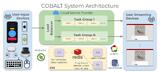
COBALT: Crowdsourcing Robot Learning via Cloud-Based Teleoperation with SmartphonesAyush Agarwal*, Ansh Gandhi*, Jeremy A. Collins, Omar Rayyan, Aryan Sarswat, Ranjani Koushik, Masoud Moghani, Ajay Mandlekar, Animesh Garg IEEE International Conference on Robotics and Automation (ICRA), 2026 paper / video / code / website / A teleoperation platform that enables uninterrupted, concurrent data collection from multiple users worldwide using everyday devices like smartphones. This work not only significantly reduces teleoperation costs but also demonstrates the scalability of smartphone-based robot learning by successfully crowdsourcing 7500+ high-quality robot demonstrations from 50+ inexperienced teleoperators across nine countries. |
|
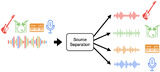
Implementing Transformer Architectures for Audio Source SeparationAyush Agarwal*, Brian Li*, Vinay Menon*, Neha Peddinti*, Yunbing Qian*, Devin Torres* IEEE MIT Undergraduate Research Technology Conference (URTC), 2022 paper / A novel transformer-based architecture that replaces BiLSTM blocks in the Open-Unmix model, achieving superior training efficiency and reduced inter-source interference on MUSDB18-HQ. |
|
Design and source code from Jon Barron's website |